You are here: Home » Resources »
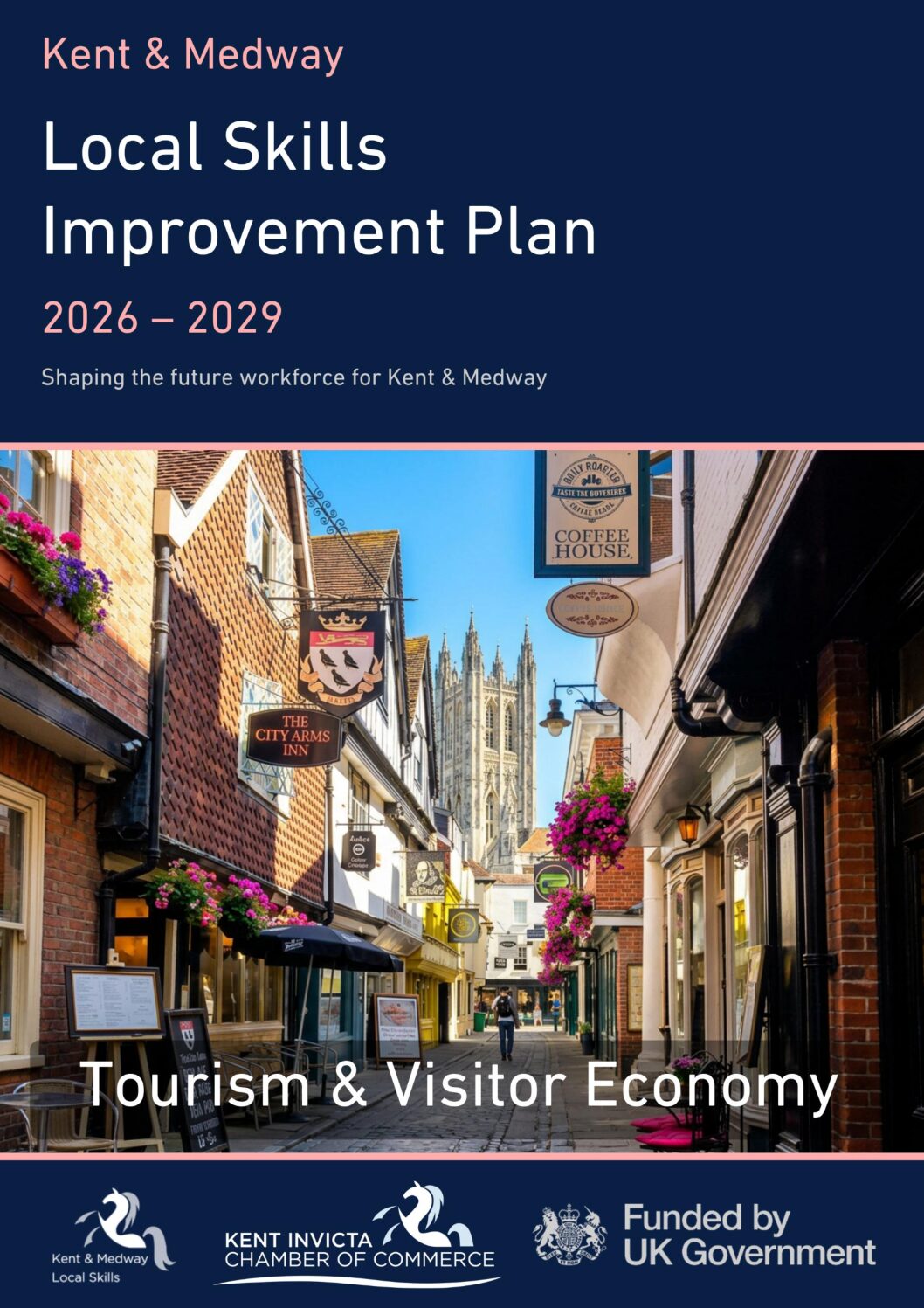
The Kent & Medway Local Skills Improvement Plan (LSIP) 2026-2029 has published its dedicated Tourism & Visitor Economy Sector Skills Plan, setting out the workforce priorities and actions needed to support one of Kent and Medway’s most important sectors. The visitor economy generates around £4 billion annually and supports approximately 77,000 to 78,000 jobs across the region, making it a significant contributor to employment, local businesses and economic growth.
The sector’s unique mix of heritage attractions, coastal destinations, countryside experiences, food and drink tourism, accommodation and events helps attract millions of visitors every year. Following a strong recovery from the pandemic, visitor numbers and spending have returned to, and in some areas exceeded, pre-pandemic levels.
However, employers continue to face significant workforce challenges. Recruitment difficulties remain across roles including chefs, kitchen staff, housekeepers, front-of-house teams, supervisors and managers. Businesses also report ongoing challenges around work readiness, customer service skills, communication, confidence, resilience and professional behaviours, particularly among new entrants to the workforce.
Key Priorities for the Visitor Economy
The Tourism & Visitor Economy Sector Plan identifies several priorities that will help strengthen the sector’s workforce over the next three years:
Turning Priorities into Action
The plan sets out a coordinated programme of activity designed to strengthen recruitment, retention and progression within the sector.
Central to delivery is the continued expansion of the Hospitality Skills Passport (HSP), an employer-led programme that helps individuals build the work readiness, practical experience and skills needed to move into hospitality and visitor economy roles. Employers and providers will work together to increase awareness of career opportunities and create clearer pathways into the sector.
The plan also calls for greater support for SMEs through flexible training, brokerage-supported placements and work-based learning opportunities. Alongside this, employers will collaborate with providers to strengthen technical training, leadership development and progression routes, helping businesses retain talent and develop future managers and leaders.
Recognising the changing needs of the industry, the plan highlights the growing importance of digital capability, including reservation systems, digital marketing, CRM tools and AI, alongside green skills such as sustainable procurement, waste reduction and resource efficiency.
Employer Perspective
James McComas, General Manager of Eastwell Manor, Champneys Hotel and Spa, said:
“As one of Kent’s largest employers and a key driver of economic growth, the Visitor Economy deserves a prominent place within this LSIP. Investing in hospitality and tourism skills is not only essential for addressing workforce challenges today, but for creating rewarding careers, strengthening local businesses and ensuring Kent remains the world-class destination it deserves to be. I would encourage tourism, hospitality, leisure and visitor attraction businesses across the region to actively engage with the LSIP, helping to shape training provision, support career pathways and develop the skilled workforce that our sector needs to thrive in the years ahead.”
Looking Ahead
The Tourism & Visitor Economy Sector Plan provides a clear roadmap for developing a larger, more skilled and more resilient workforce capable of supporting sustainable growth across Kent and Medway. By strengthening recruitment pipelines, improving work readiness, supporting progression and embedding digital and green skills, the plan aims to ensure the sector continues to thrive and deliver exceptional visitor experiences.
Get Involved
The success of the Tourism & Visitor Economy Sector Plan relies on continued employer engagement. Whether you can offer placements, apprenticeships, workplace visits, industry insight, guest speakers or support curriculum development, your involvement can help shape the future workforce for the sector.
To find out more about the Sector Plan, the Kent Hospitality Focus Group (KHFG), or opportunities to support delivery of the LSIP priorities, please contact the Kent & Medway LSIP team at lsip@kentinvictachamber.co.uk.
Read the full Tourism & Visitor Economy Sector Plan below and explore the wider Kent & Medway LSIP 2026-2029, including all associated annexes here.