You are here: Home » Resources »
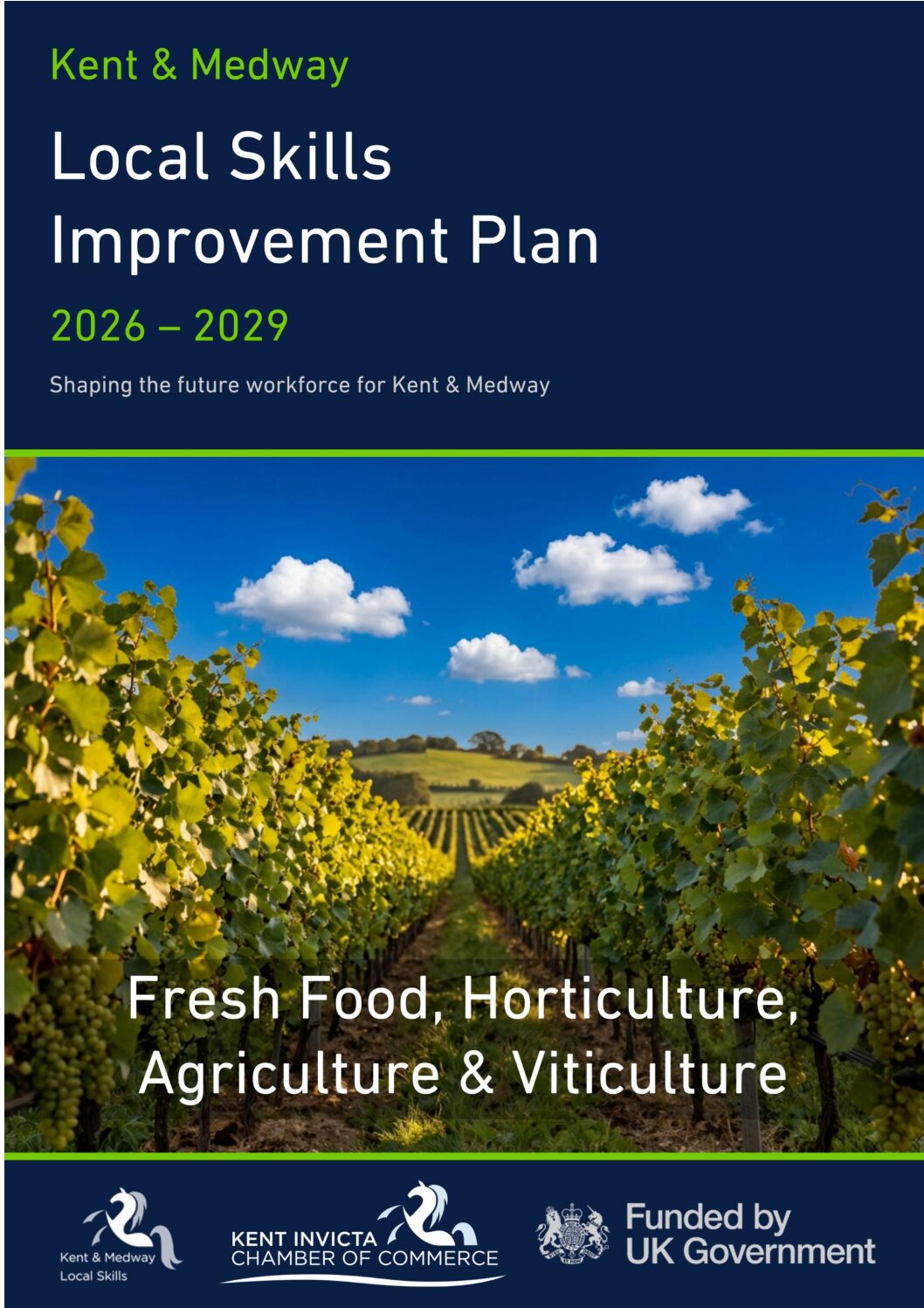
The Kent & Medway Local Skills Improvement Plan (LSIP) 2026–2029 has published its dedicated Fresh Food, Horticulture, Agriculture & Viticulture Sector Skills Plan, highlighting the workforce priorities and actions needed to support one of the region’s most strategically important sectors.
Kent and Medway is recognised nationally as a powerhouse for food production and land-based industries, with around 4,180 businesses supporting approximately 65,000 jobs and contributing an estimated £2.4 billion annually to the local economy. The region’s strengths span food production, horticulture, agriculture, viticulture, logistics and agri-tech innovation, supported by nationally significant assets including Thanet Earth, NIAB East Malling and the Natural Resources Institute.
The sector also plays a vital role in the identity of the ‘Garden of England’, producing around 40% of England’s soft and stone fruit and supporting a growing viticulture industry with more than 50 vineyards across the region.
However, employers continue to face significant workforce pressures. Challenges include the availability of seasonal labour, difficulties recruiting and retaining permanent staff, growing demand for technical and engineering skills, and the need to develop future leaders capable of navigating technological change and sustainability challenges.
Key Priorities for the Sector
The Sector Plan identifies several key priorities that will support workforce resilience and future growth:
Turning Priorities into Action
The plan sets out a programme of practical activity designed to strengthen workforce capacity and improve long-term resilience.
A major focus will be improving awareness of modern careers in fresh food, agriculture and horticulture, helping young people understand the wide range of opportunities available in areas such as engineering, technology, science, logistics and business, alongside traditional production roles.
The plan also supports the development of a hub-and-spoke Centre of Excellence model that will provide employer-led technical training, placements and short courses focused on areas such as maintenance engineering, technical operations and hybrid agri-tech capability. This will help ensure businesses can access the technical skills needed as automation and digital technologies become increasingly important across the sector.
Alongside this, actions will strengthen leadership and management pathways, build greater food safety and quality assurance capability, and create clearer progression routes into higher-level specialist careers including agronomy, crop science and viticulture. Sustainability and resource efficiency will also be embedded throughout delivery to support future workforce requirements.
Employer Perspective
Carol Ford, Chair, Kent & Medway Fresh Food & Horticulture Group and Executive Chair of Produced in Kent, said:
“This is excellent news for employers across Kent and Medway. Local Skills Improvement Plans play a crucial role in ensuring that training, education and skills development reflect the real needs of businesses on the ground. For the food, farming and horticulture sector, this means creating stronger links between industry, education and future talent, helping people to discover the wide range of careers our sector offers. Developing the workforce of tomorrow is essential if we are to build a resilient, productive and sustainable food system, and we look forward to working with partners across the region to help make that a reality.”
Looking Ahead
The Fresh Food, Horticulture, Agriculture & Viticulture Sector Plan provides a roadmap for strengthening workforce capability across one of Kent and Medway’s most important growth sectors. By improving careers awareness, strengthening technical and digital skills, supporting progression and building leadership capacity, the plan aims to ensure businesses can access the talent needed to remain competitive and innovative.
Get Involved
The success of the Sector Plan relies on continued employer engagement. Whether you can offer industry placements, provide careers inspiration, support curriculum development, share specialist expertise or help shape future workforce priorities, your involvement can help strengthen the sector’s future talent pipeline.
To find out more about the Fresh Food, Horticulture, Agriculture & Viticulture Sector Plan or opportunities to support delivery of the LSIP priorities, please contact the Kent & Medway LSIP team at lsip@kentinvictachamber.co.uk.
Read the full Sector Skills Plan below and explore the wider Kent & Medway LSIP 2026–2029 on the LSIP website here.